Depression can affect almost every aspect of daily life, from sleep and concentration to relationships, work, and personal well-being. While medication and psychotherapy help many people, some individuals continue to experience symptoms despite trying conventional treatments.
For these patients, TMS therapy for depression may be an option worth discussing with a qualified psychiatrist.
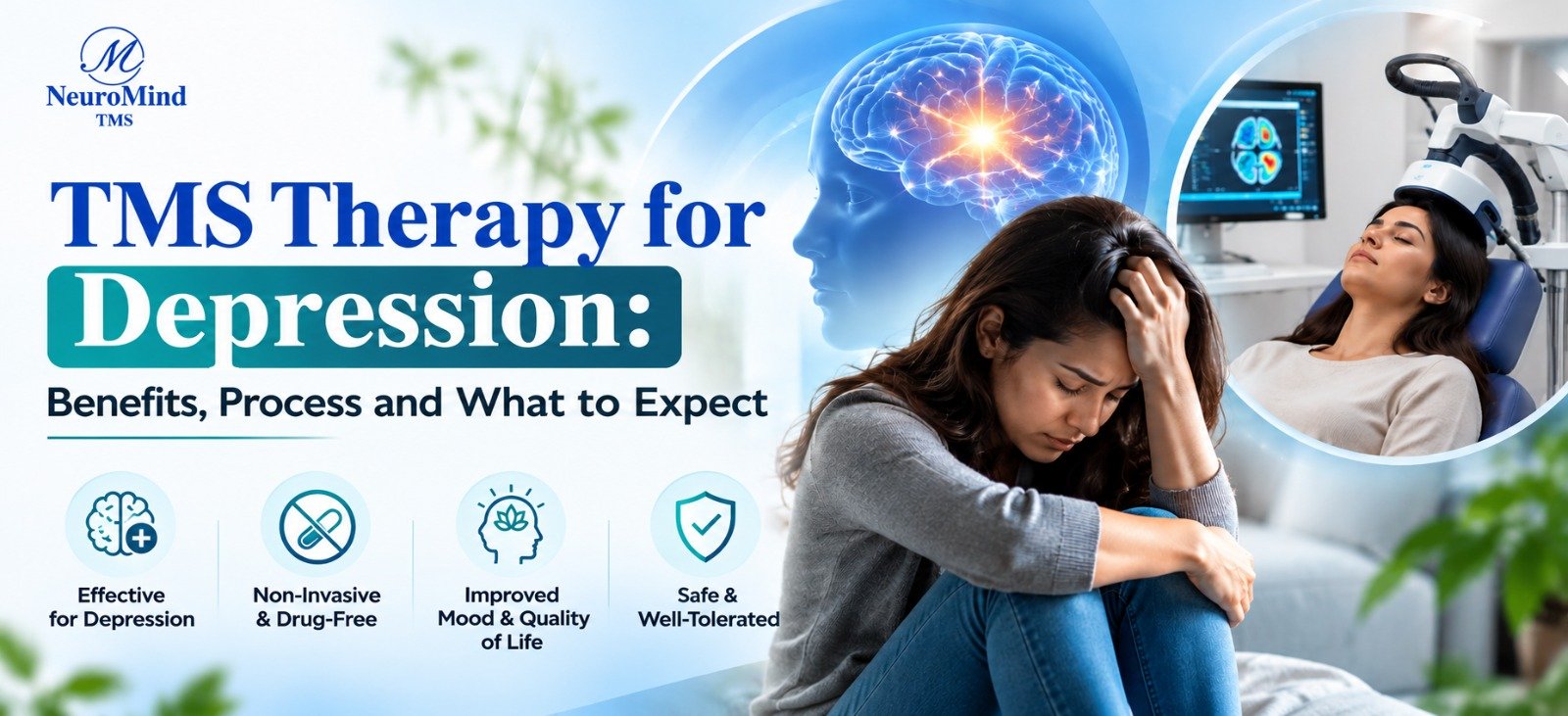
Transcranial Magnetic Stimulation (TMS) is a non-invasive brain stimulation treatment that uses magnetic pulses to stimulate specific areas of the brain involved in mood regulation. It does not require surgery or general anesthesia and is generally performed in an outpatient setting.
At NeuroMind TMS Centre in Saket, New Delhi, patients can explore TMS treatment options as part of an individualized mental healthcare plan.
In this guide, we explain how TMS works, who may benefit, what happens during treatment, potential side effects, and what patients should know before considering this approach.
What Is TMS Therapy for Depression?
Transcranial Magnetic Stimulation, commonly called TMS, is a treatment that uses magnetic fields to stimulate nerve cells in specific regions of the brain.
These brain regions are involved in regulating mood, motivation, attention, and emotional responses. In depression, activity and communication within certain brain networks may be altered.
TMS aims to influence these networks through controlled magnetic stimulation.
Unlike antidepressant medication, which acts through chemical processes throughout the body, TMS delivers stimulation to targeted areas of the brain. However, TMS is not suitable for everyone, and its effectiveness varies between individuals.
Repetitive Transcranial Magnetic Stimulation (rTMS) is an established treatment option for certain patients with depression, particularly when previous treatments have not provided sufficient improvement.
Deep Transcranial Magnetic Stimulation (dTMS) is another approach that uses a specialized coil designed to stimulate broader and deeper brain regions.
How Does TMS Therapy Work for Depression?
TMS treatment involves placing a magnetic coil against or near the patient’s scalp. The device generates brief magnetic pulses that pass through the skull and induce small electrical currents in targeted brain tissue.
These pulses stimulate nerve cells and influence activity within brain circuits associated with mood regulation.
The treatment process generally involves the following steps:
Clinical assessment: A psychiatrist reviews the patient’s symptoms, medical history, previous treatments, and suitability for TMS.
Treatment planning: The clinical team determines the appropriate stimulation protocol and target area.
Initial measurements: The specialist establishes treatment settings, which may include determining the patient’s motor threshold.
TMS sessions: The patient sits comfortably while the device delivers controlled magnetic pulses.
Progress monitoring: The clinical team assesses changes in symptoms and adjusts the treatment plan when appropriate.
TMS is usually delivered over multiple sessions. The exact schedule depends on the protocol, diagnosis, clinical response, and the treating specialist’s recommendations.
Who May Benefit from TMS Treatment for Depression?
TMS may be considered for adults with major depressive disorder, especially when antidepressant medication or psychotherapy has not produced adequate improvement or when medication side effects create difficulties.
A psychiatrist may assess whether TMS is appropriate for someone who:
- Continues to experience depressive symptoms despite previous treatment.
- Has not responded adequately to one or more antidepressant medications.
- Experiences medication-related side effects that affect treatment adherence.
- Wants to discuss a non-invasive treatment option.
- Needs an alternative or additional approach as part of a broader depression treatment plan.
TMS may also be considered in certain other clinical situations, depending on the specific device, protocol, and applicable treatment guidance.
Important: TMS is not automatically the best treatment for every person with depression. The decision should be based on a professional assessment of symptoms, previous treatments, medical history, and individual needs.
What Are the Potential Benefits of TMS Therapy?
TMS offers several characteristics that may make it suitable for some people seeking depression treatment.
- Non-Invasive Treatment
TMS does not require brain surgery or the implantation of electrodes. Magnetic stimulation is delivered externally through a coil positioned near the scalp.
- No General Anesthesia Is Usually Required
Standard outpatient TMS sessions generally do not require general anesthesia. Patients remain awake during the procedure.
- Targeted Brain Stimulation
TMS focuses on specific brain regions associated with mood regulation rather than delivering medication throughout the body.
- An Option After Inadequate Response to Other Treatments
For patients who have not experienced sufficient improvement with conventional depression treatments, TMS may offer another approach to discuss with their psychiatrist.
- Treatment Can Fit into an Outpatient Routine
Many patients can return to their usual activities after a session, although individual experiences may vary.
- May Be Used Alongside Other Care
Depending on the patient’s needs, TMS may be incorporated into a wider treatment plan that includes medication, psychotherapy, or other forms of clinical support.
The potential benefits differ from person to person. No treatment can guarantee a particular outcome.
What Happens During a TMS Therapy Session?
Understanding what to expect can help reduce uncertainty for people considering TMS treatment.
Before the Session
Your psychiatrist will review your medical and psychiatric history, current medications, and previous treatment experiences.
You should inform the clinical team if you have a history of seizures, implanted electronic devices, metal implants near the head, or other medical conditions that could affect treatment suitability.
The team will explain the procedure, possible side effects, and recommended treatment schedule.
During the Session
You will usually sit in a treatment chair while the clinician positions the magnetic coil near your scalp.
The device delivers a series of magnetic pulses according to the prescribed protocol. You may hear clicking sounds and feel a tapping sensation on your scalp.
Some people experience mild discomfort during the initial sessions, which may become more manageable as treatment progresses.
You remain awake throughout a standard TMS session.
After the Session
Most patients can resume their normal daily activities after treatment, subject to their individual response and the clinical team’s advice.
Your clinician may periodically review your mood, sleep, concentration, and other symptoms to evaluate whether the treatment is helping.
How Many TMS Sessions Are Needed for Depression?
There is no single treatment schedule that applies to every patient.
A conventional course of rTMS often involves sessions on weekdays over several weeks. Some newer protocols use shorter treatment sessions or a more compressed schedule, but availability and suitability depend on the device and clinical circumstances.
The number of sessions may depend on:
- The type of TMS being used.
- The severity and duration of depressive symptoms.
- Previous treatment history.
- The prescribed stimulation protocol.
- How symptoms change during treatment.
- The psychiatrist’s clinical assessment.
Patients should ask their treatment provider for an individualized schedule and a realistic explanation of when improvement might be assessed.
It is important not to assume that a shorter course will produce the same results for every patient.
Is TMS Therapy Safe for Depression?
TMS is generally well tolerated when administered by appropriately trained professionals, but it is not entirely risk-free.
Possible side effects include:
- Headache.
- Scalp discomfort or tenderness.
- Facial muscle twitching during stimulation.
- Temporary lightheadedness or dizziness.
A seizure is a rare but serious potential complication. The treating team should evaluate relevant risk factors before treatment and follow appropriate safety protocols.
Certain implanted devices and metal objects near the head may affect eligibility. Patients should disclose their complete medical history and all relevant devices or implants during the assessment.
Your clinician should explain the benefits, risks, alternatives, and precautions before you decide whether to proceed.
TMS Therapy vs Antidepressant Medication
TMS and antidepressant medication work differently, and one is not universally better than the other.
| Feature | TMS Therapy | Antidepressant Medication |
|---|---|---|
| How it works | Uses magnetic pulses to stimulate targeted brain regions | Acts on chemical signalling systems in the body |
| Delivery | Outpatient sessions using a stimulation device | Usually taken orally, depending on the medication |
| Common considerations | Session attendance, scalp discomfort, headaches and rare seizure risk | Medication-specific side effects, interactions and adherence |
| Best suited for | Selected patients based on clinical assessment | Patients for whom medication is clinically appropriate |
| Can be combined with other care? | Yes, when recommended | Yes, when recommended |
For some patients, medication remains an appropriate first-line treatment. Others may benefit from psychotherapy, a combination of treatments, or brain stimulation therapy.
Never stop or change prescribed antidepressants without consulting your treating clinician.
What Is the Difference Between rTMS and Deep TMS for Depression?
Both rTMS and Deep TMS use magnetic stimulation, but they differ in their coil designs and stimulation characteristics.
rTMS: Uses repeated magnetic pulses delivered through a coil positioned near the scalp to stimulate a targeted brain region.
Deep TMS (dTMS): Uses a specialized coil designed to stimulate broader and deeper brain regions.
Neither approach is automatically the right choice for every patient. The most appropriate option depends on the clinical indication, available evidence, treatment device, previous treatment history, and individual assessment.
To learn more, read our related guide: Difference Between TMS and dTMS: Which Treatment Is Right for You?
How Much Does TMS Treatment for Depression Cost?
The cost of TMS treatment depends on the type of stimulation, number of sessions, clinical assessment fees, treatment protocol, and healthcare provider.
Before starting treatment, ask for a clear estimate of the total expected cost, including consultation, treatment sessions, and follow-up care.
To understand the factors that influence pricing, read our guide: TMS Therapy Cost in India: A Complete Guide to TMS Treatment Cost
Contact the clinic directly for current pricing and an individualized treatment estimate.
Why Consider NeuroMind TMS Centre for Depression Treatment in Delhi?
NeuroMind TMS Centre is a mental healthcare centre located in Saket, New Delhi, offering TMS, rTMS, and Deep TMS alongside other mental health services.
Patients can discuss their symptoms, previous treatments, and possible treatment options with the clinical team to understand whether TMS may be appropriate for their needs.
The centre’s approach includes assessment and individualized treatment planning rather than assuming the same therapy is suitable for everyone.
If you are looking for TMS therapy in Delhi, a consultation can help you understand the available options, potential benefits, safety considerations, and expected treatment schedule.
Learn more about the centre’s TMS therapy services.
Frequently Asked Questions About TMS Therapy for Depression
Is TMS therapy effective for depression?
TMS has clinical evidence supporting its use for certain patients with depression, particularly those who have not responded adequately to conventional treatments. Individual outcomes vary, and a psychiatrist can help determine whether it is appropriate.
How long does TMS treatment take?
A conventional course often involves multiple sessions over several weeks. Some protocols use shorter or more frequent sessions. The schedule depends on the treatment method and the patient’s clinical needs.
Is TMS therapy painful?
TMS is not generally described as painful, but some patients experience tapping sensations, scalp discomfort, or headaches. Your clinician can explain ways to manage discomfort.
Can I return to work after TMS treatment?
Many patients can resume their usual activities after a session. Your individual response and your clinician’s advice should guide your plans.
Can TMS help if antidepressants have not worked?
TMS may be considered for certain patients whose depression has not improved sufficiently with antidepressant medication. A specialist should review previous treatments and determine whether TMS is suitable.
Does TMS therapy cause memory loss?
TMS does not generally have the same memory-related side-effect profile as electroconvulsive therapy (ECT). However, every patient’s experience can differ, and your clinician should explain the known risks and benefits.
Can TMS replace antidepressants?
Not necessarily. Some patients may receive TMS alongside medication or psychotherapy. Do not discontinue medication without guidance from your prescribing clinician.
Is TMS available in Delhi?
Yes. NeuroMind TMS Centre offers TMS-related treatment services in Saket, New Delhi. Patients can contact the centre to arrange an assessment and discuss available options.
Who should not receive TMS therapy?
TMS may be unsuitable for some people, including those with certain implanted devices or metal objects near the head. Other medical factors may also affect eligibility. A qualified clinician must assess individual suitability.
How do I book a TMS consultation at NeuroMind TMS Centre?
You can contact NeuroMind TMS Centre by phone at +91 88003 28776 or visit the official contact page to enquire about an appointment.
Take the Next Step Towards Depression Care
Living with depression can be challenging, particularly when previous treatments have not provided enough relief. Exploring other evidence-based treatment options with a qualified mental health professional can help you make a more informed decision.
TMS therapy may be an option for selected patients, but the right treatment depends on your symptoms, medical history, previous treatment experiences, and personal needs.
