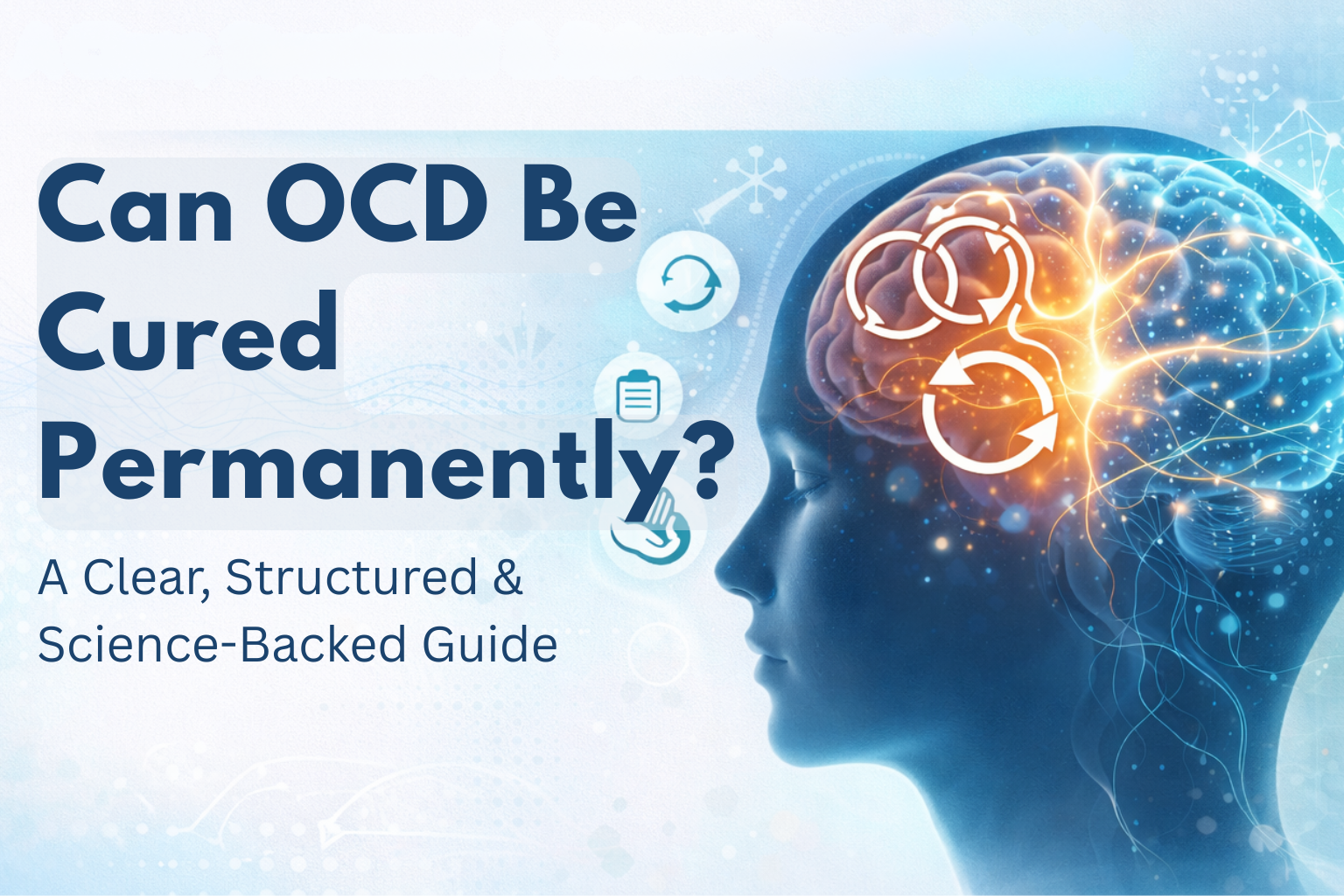
Millions of people across the globe are suffering from Obsessive-Compulsive Disorder (OCD). However, the biggest problem associated with OCD is the lack of information about the condition. The biggest question everyone asks about OCD is:
Can Obsessive-Compulsive Disorder (OCD) be cured permanently?
You might have searched for the answer to this question on the internet, but the answer might have confused you even more. The answer, however, is more positive than you think. Yes, you can cure OCD, but with the right kind of help, you can control OCD to a greater extent, which can reduce the symptoms of OCD to a level where you no longer feel the symptoms.
What is OCD (Obsessive-Compulsive Disorder)?
Obsessive-Compulsive Disorder is a mental health condition that involves two major components:
Obsessions:
These are the persistent, unwanted, and recurring ideas, fears, or images that bother you.
Compulsions:
These are the actions you perform to reduce the anxiety caused by the obsessions.
Examples of Obsessive-Compulsive Disorder:
-
- Washing your hands repeatedly due to fear of germs.
-
- Checking the locks repeatedly.
-
- Having disturbing or intrusive ideas
Can OCD Be Cured Permanently?
The Real Answer
OCD is highly treatable, and many people have gone into long-term recovery using the appropriate approach.
The current understanding of modern psychiatry and neuroscience has demonstrated that symptoms of OCD can be reduced to a point that they do not interfere with one’s life. One can reach a point where they feel totally free from the disorder in real-life terms.
NeuroMind TMS Centre has developed a treatment approach that helps patients recover from OCD in a sustained manner by addressing the biological and psychological aspects of the disorder.
What Does OCD Recovery Actually Mean?
It does not necessarily mean that you will be totally free from obsessive thoughts. It means that:
-
- The obsessive thoughts will lose their impact and power
-
- The anxiety will be under control
-
- The compulsive behavior will be reduced to zero
-
- You will be in control of your actions and decisions
-
- You will be totally free from the disorder in real-life terms.
Why OCD Develops and Persists
OCD has a tendency to develop in individuals due to the following factors:
-
- Genetic factors
-
- Overactive brain circuits involving fear and habits
-
- Environmental stressors and life events
However, with the correct treatment, the brain can be trained to respond in different ways, thus leading to improved health in the long term.
Best Treatments That Help You Recover from OCD
1. Cognitive Behavioral Therapy (CBT) with ERP
The best treatment for OCD is the combination of CBT and ERP.
The treatment helps you:
-
- Overcome your fears in a controlled manner
-
- Stop avoidance behaviors
-
- Stop compulsions
-
- Change the way your brain responds to anxiety
ERP helps in breaking the cycle between obsessions and compulsions, thus leading to long-term changes.
2. Medication for OCD
-
- For individuals with moderate to severe OCD, medication has proven to be of great help.
-
- SSRIs are the best medication for OCD treatment
-
- The medication helps in reducing anxiety and the intensity of OCD
-
- The medication also helps in improving the effectiveness of the treatment
3. Advanced Treatment Options
For those who don’t respond to these treatments, there are advanced treatment options available:
-
- Non-invasive and drug-free treatment
-
- Specifically targets the brain regions associated with OCD
Advanced treatment options are also available at TheNeuroMind.
4. Long-Term Skill Building
In order to achieve long-term recovery, it is important to develop essential skills that are vital in maintaining the recovery process and preventing any future occurrences of the disorder. These skills include:
-
- Dealing with uncertainty
-
- Managing emotions
-
- Overcoming overthinking habits
-
- Building resilience to stress
Can OCD Symptoms Return?
Yes, there are possibilities of OCD symptoms recurring in certain conditions, like:
-
- High stress conditions
-
- Significant changes in life
-
- Emotional challenges
However, if the proper treatment has been undertaken, the individual is in a position to handle these conditions and respond to the symptoms in the best way.
How to Reduce Repetitive Thoughts and Behaviors
These are some of the steps that will guide the recovery process:
-
- Avoid attempts to suppress or fight your thoughts
-
- Avoid carrying out compulsions
-
- Use gradual exposure techniques
-
- Adhere to your structured therapy plan
-
- Consult with professional experts
Consistency in these steps is an integral part of the recovery process, which will ultimately yield the desired results.
Why Early Treatment Matters
It is not possible for OCD to improve on its own. If not treated, the condition may worsen, causing:
-
- Increased severity of symptoms
-
- Increased anxiety
-
- Influence on daily activities
However, early OCD treatment of the condition will ensure faster recovery. The symptoms will not develop into habits, as they are treated early enough.
Take the First Step towards Recovery
Are you struggling with unwanted thoughts, compulsions, and compulsive behaviors? The right help at the right time can make a big difference.
Our structured and scientifically based program can help you regain control and start your journey towards complete and long-lasting recovery.
Consult NeuroMind TMS Centre today and start your journey towards a more balanced and healthy you.
