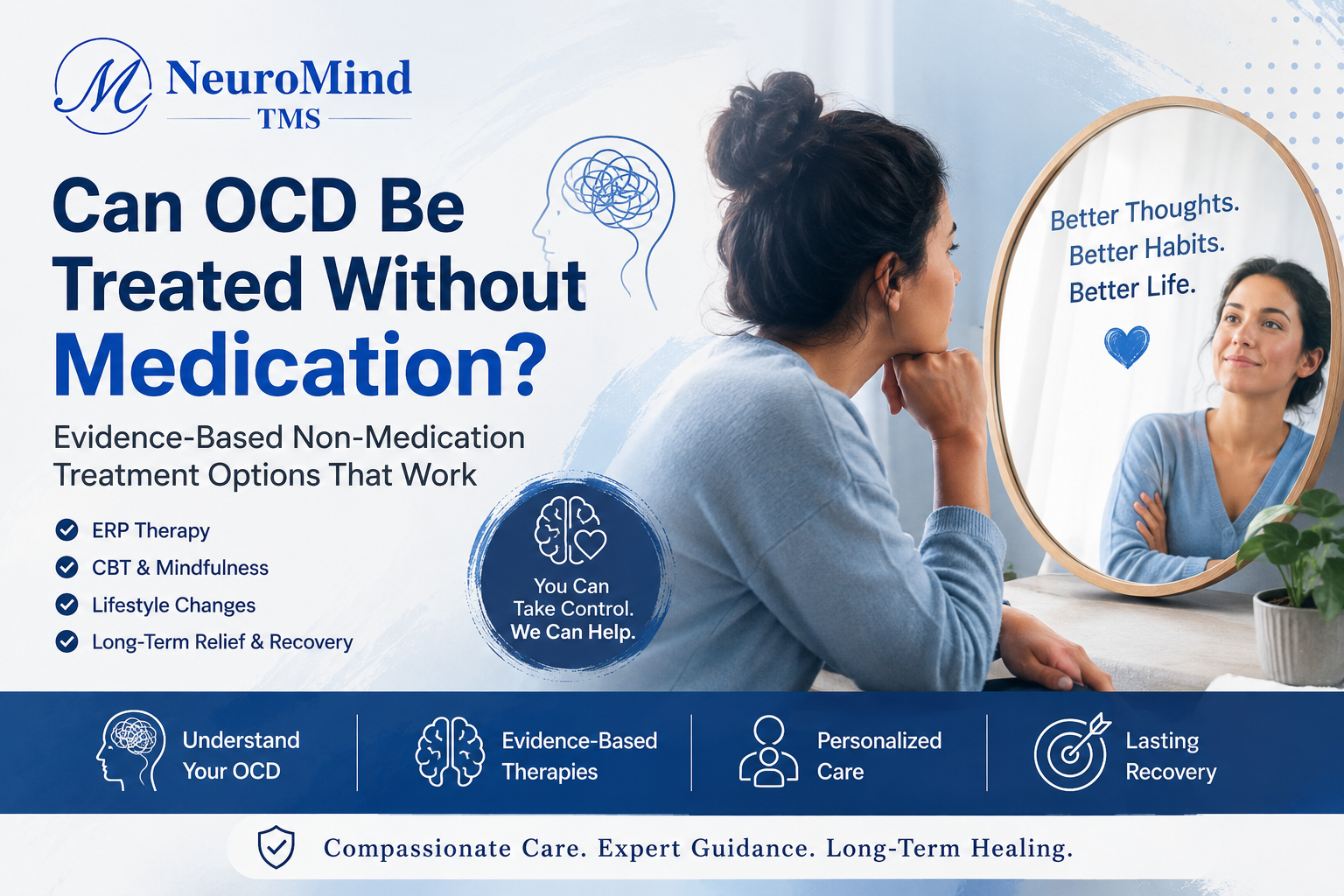
Yes, Obsessive-Compulsive Disorder (OCD) can often be treated without medication, especially in mild to moderate cases. Evidence-based therapies such as Exposure and Response Prevention (ERP) and Cognitive Behavioural Therapy (CBT) are considered first-line treatments and have helped many individuals significantly reduce OCD symptoms without relying on medication. However, the most appropriate treatment depends on the severity of symptoms, how much they affect daily life, and each person’s unique circumstances.
For individuals with severe OCD or those experiencing significant impairment, psychiatrists may recommend a combination of psychotherapy and medication to achieve the best outcomes. The key is to receive a proper assessment rather than attempting to manage OCD alone.
What Is Obsessive-Compulsive Disorder (OCD)?
Obsessive-Compulsive Disorder (OCD) is a chronic mental health condition characterised by obsessions and compulsions.
Obsessions are unwanted, repetitive thoughts, images, or urges that cause significant anxiety or distress.
Compulsions are repetitive behaviours or mental rituals performed to reduce the anxiety caused by these obsessions.
For example, a person may repeatedly worry that they have contaminated their hands (obsession) and respond by washing them over and over again (compulsion). While these behaviours may temporarily reduce anxiety, they often reinforce the OCD cycle, making symptoms stronger over time.
OCD can affect people of all ages and interfere with work, education, relationships, and overall quality of life. Fortunately, effective treatments are available, and many people experience significant improvement with professional care.
Who Can Benefit from OCD Treatment Without Medication?
Not everyone diagnosed with OCD requires medication. Many individuals respond well to psychological therapies alone.
You may be a good candidate for non-medication treatment if you:
- Have mild to moderate OCD symptoms.
- Are motivated to actively participate in therapy.
- Can attend regular counselling or psychotherapy sessions.
- Prefer to avoid medication due to personal or medical reasons.
- Have experienced medication side effects in the past.
- Do not have severe depression, psychosis, or suicidal thoughts alongside OCD.
A qualified psychiatrist or psychologist will assess your symptoms, medical history, and daily functioning before recommending the most suitable treatment plan.
Effective Non-Medication Treatments for OCD
1. Exposure and Response Prevention (ERP)
Exposure and Response Prevention (ERP) is widely recognised as the gold standard psychological treatment for OCD. It is a specialised form of Cognitive Behavioural Therapy that gradually exposes individuals to situations that trigger obsessive thoughts while helping them resist performing compulsive behaviours.
For example, someone with contamination-related OCD may gradually learn to touch everyday objects without immediately washing their hands. Over time, the anxiety naturally decreases, and the urge to perform compulsions becomes less intense.
Although ERP can be challenging initially, it has consistently demonstrated excellent long-term outcomes when guided by trained mental health professionals.
2. Cognitive Behavioural Therapy (CBT)
Cognitive Behavioural Therapy helps individuals recognise unhelpful thinking patterns that contribute to OCD and develop healthier ways of responding to intrusive thoughts.
One of the most important lessons in CBT is understanding that having an unwanted thought does not mean it reflects reality or predicts future events. Learning to accept uncertainty and reduce compulsive behaviours gradually weakens OCD’s influence over daily life.
CBT is often combined with ERP because the two approaches complement each other effectively.
3. Mindfulness-Based Techniques
Mindfulness encourages individuals to observe intrusive thoughts without reacting to them or judging themselves.
Instead of trying to suppress unwanted thoughts, mindfulness teaches people to acknowledge their presence while allowing them to pass naturally. This approach reduces emotional distress and helps individuals become less controlled by obsessive thinking.
Mindfulness is generally used alongside ERP or CBT rather than as a standalone treatment.
4. Family Education and Support
OCD affects not only the individual but also family members. Loved ones may unknowingly reinforce compulsive behaviours by offering constant reassurance or participating in rituals.
Family education helps relatives understand OCD, communicate more effectively, and support recovery without strengthening compulsions. In many cases, involving family members improves treatment outcomes and reduces conflict at home.
5. Healthy Lifestyle Habits
Lifestyle changes cannot cure OCD, but they can support overall mental health and improve resilience during treatment.
Helpful habits include:
- Regular physical exercise
- Consistent sleep schedule
- Balanced nutrition
- Limiting alcohol and recreational drugs
- Practising stress-management techniques
- Maintaining social connections
These habits help reduce stress, which can otherwise worsen OCD symptoms.
Can TMS Therapy Help OCD?
Transcranial Magnetic Stimulation (TMS) is a non-invasive treatment that uses magnetic pulses to stimulate specific brain areas involved in emotional regulation and compulsive behaviours.
For some individuals whose OCD symptoms have not improved sufficiently with conventional treatments, psychiatrists may consider TMS Therapy as part of a comprehensive treatment plan. Research in this area continues to evolve, and treatment suitability depends on careful clinical evaluation.
If recommended, TMS is usually combined with psychological therapies rather than replacing them entirely.
When Is Medication Necessary?
Although many people benefit from non-medication treatments, medication remains an important option for certain individuals.
A psychiatrist may recommend medication if:
- OCD symptoms are severe.
- Daily functioning is significantly affected.
- The individual cannot effectively participate in psychotherapy due to overwhelming anxiety.
- OCD occurs alongside severe depression or another psychiatric condition.
- Previous psychological treatments have not produced sufficient improvement.
Selective Serotonin Reuptake Inhibitors (SSRIs) are commonly prescribed for OCD and are often combined with ERP or CBT for better long-term outcomes.
Medication should always be started, adjusted, or discontinued under the supervision of a qualified psychiatrist.
Can OCD Be Cured Without Medication?
There is currently no guaranteed permanent cure for OCD, but it is a highly treatable condition.
Many people experience substantial improvement through evidence-based therapies and are able to lead productive, fulfilling lives. Some individuals achieve long periods with minimal symptoms, while others learn effective strategies to manage occasional relapses.
The earlier treatment begins, the better the chances of reducing the long-term impact of OCD.
Frequently Asked Questions
Is therapy more effective than medication for OCD?
For many individuals with mild to moderate OCD, Exposure and Response Prevention (ERP) combined with Cognitive Behavioural Therapy (CBT) is considered a first-line treatment and may be highly effective without medication. For severe OCD, a combination of therapy and medication often provides the best results.
Can OCD go away on its own?
OCD symptoms may fluctuate over time, but they rarely disappear completely without appropriate treatment. Seeking professional help early can prevent symptoms from becoming more severe.
Is medication required for lifelong treatment?
Not necessarily. Some individuals require medication only for a limited period, while others manage their symptoms successfully with psychotherapy alone. Treatment decisions should always be made with a psychiatrist.
How long does non-medication treatment take?
Many people begin noticing improvement within 8 to 12 weeks of consistent ERP or CBT, although recovery timelines vary depending on symptom severity and individual response.
Should I ignore obsessive thoughts?
Trying to forcefully suppress obsessive thoughts often makes them stronger. Evidence-based therapies teach healthier ways to respond to these thoughts without reinforcing compulsive behaviours.
