Deep TMS Therapy

What Is Deep TMS Therapy?

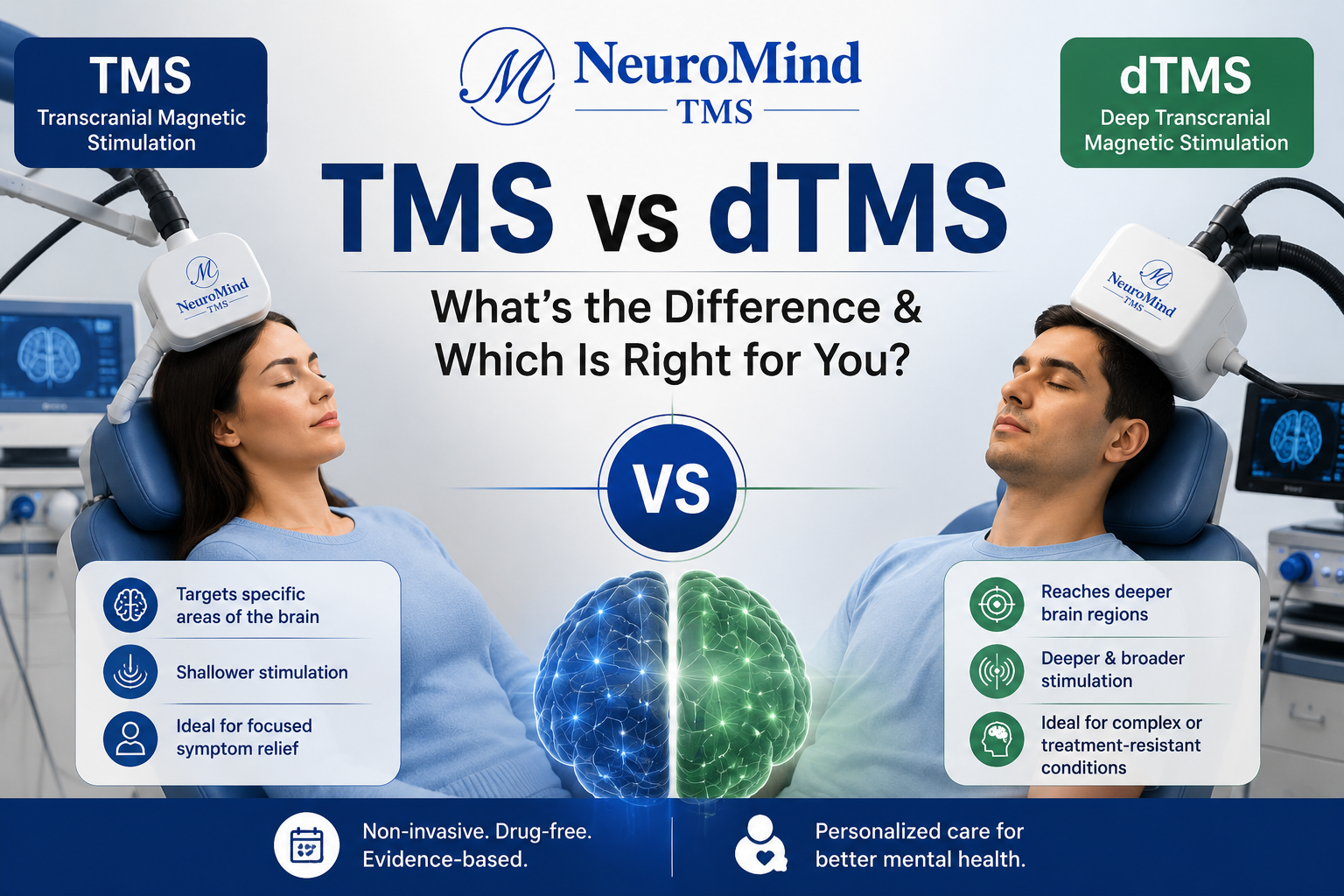
Deep Transcranial Magnetic Stimulation (Deep TMS) is a non-invasive, clinically proven neuromodulation treatment that uses magnetic pulses to stimulate specific brain circuits associated with mood, anxiety, compulsive behavior, and other psychiatric conditions. Unlike traditional TMS, Deep TMS can reach deeper and broader areas of the brain, thanks to its specialized helmet and proprietary H-coil.

How Does Deep TMS Work?

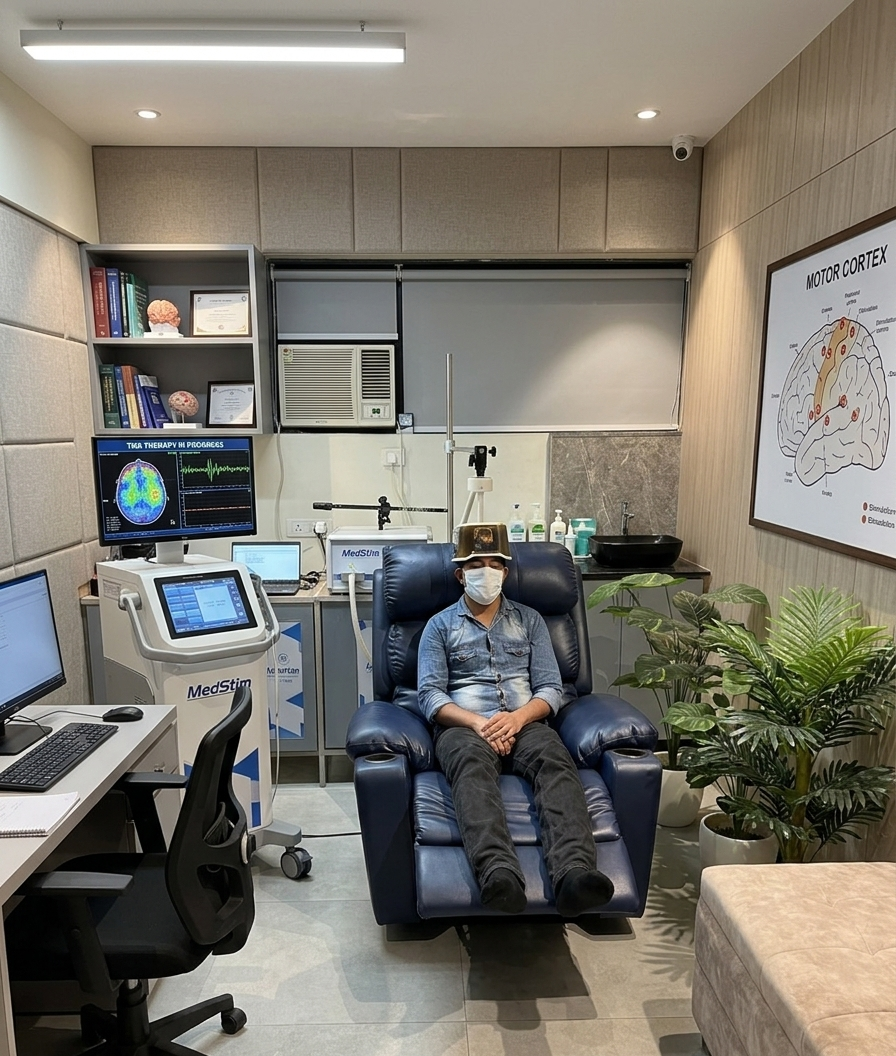
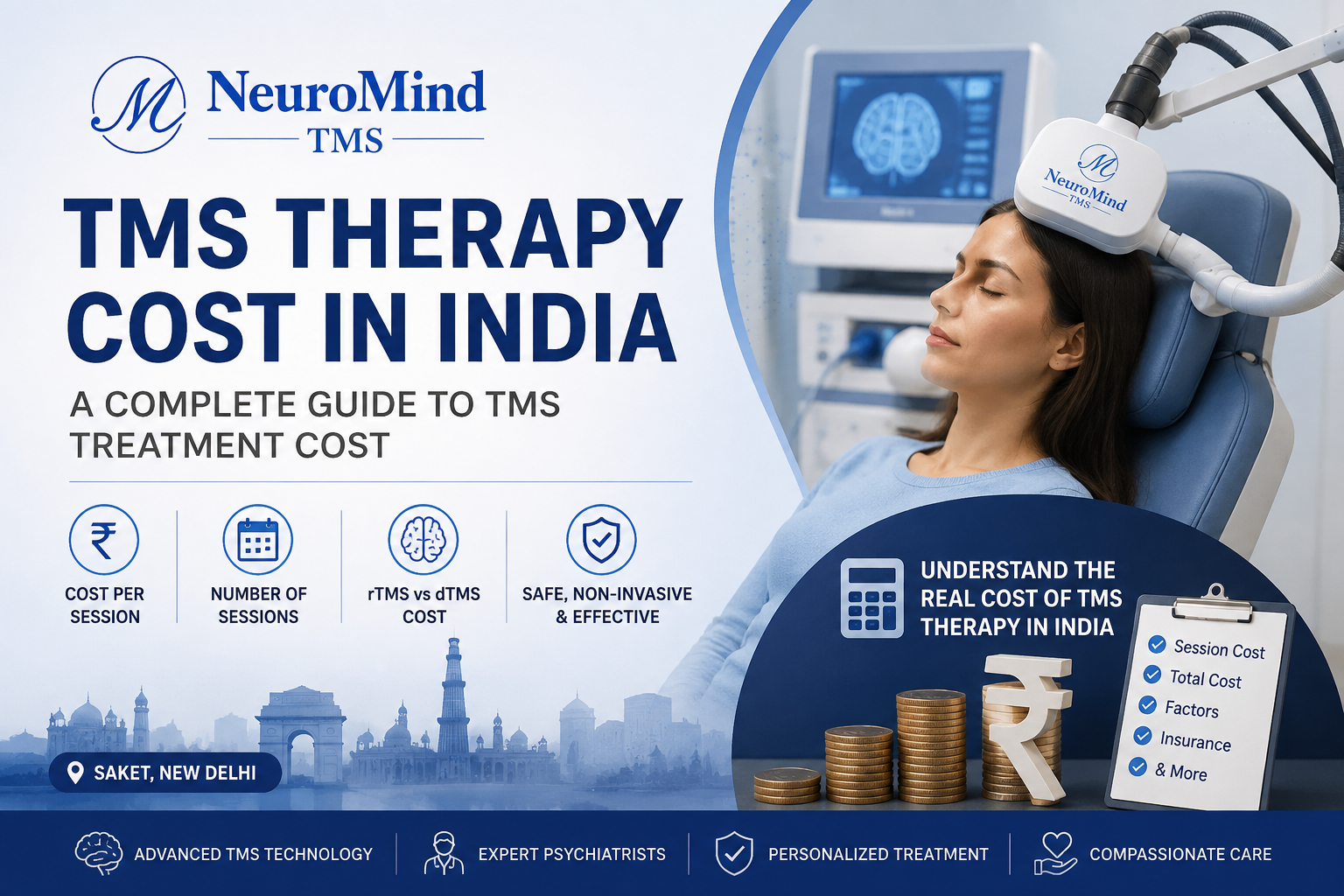
Helmet-like Device: You sit in a comfortable chair while a padded helmet containing the H-coil is placed on your head.

Magnetic Pulses: The device delivers repeated magnetic pulses (similar in strength to MRI fields) that penetrate the skull to stimulate neural activity in targeted brain regions.

Session Duration: Each session lasts around 20 minutes (sometimes up to 40), during which you are fully awake and alert.

Treatment Schedule: A typical protocol involves daily sessions (5 days/week) for 4–6 weeks, followed by periodic maintenance, as needed.

No Anesthesia or Recovery Time: Because it’s non-surgical, there’s no need for anesthesia or long recovery — you can go back to your day immediately.

What Conditions Can Be Treated with Deep TMS?

Deep TMS is FDA-cleared (in relevant jurisdictions) for several conditions, including:

  • Major Depressive Disorder (especially treatment-resistant)
  • Obsessive-Compulsive Disorder (OCD)
  • Smoking addiction / nicotine dependence
  • Anxious depression and other mood-related disorders (depending on protocol)

Benefits of Deep TMS

Benefits of DEEP TMS Therapy

Effective for Treatment-Resistant Cases: Many patients who haven’t responded to medications or therapy show significant improvement.

No Systemic Side Effects: Since there are no drugs involved, side effects like weight gain, sexual dysfunction, or systemic toxicity are avoided.

Safe and Well-Tolerated: The most common side effects are mild scalp discomfort or headache, which usually resolve quickly.

No Memory Loss: Unlike ECT, Deep TMS does not require seizures or anesthesia, and it does not generally impair memory.

Flexible Maintenance: Patients can continue with maintenance sessions post-treatment to sustain benefits.

Non-Invasive Nature: Here, it is crucial to note that unlike another treatment known as electroconvulsive therapy (ECT), TMS does not use anesthesia or cause seizures. However, it is a noninvasive technique, making it less risky for many patients as compared to the invasive methods. 

Minimal Side Effects: The side effects range from mild headaches to discomfort that consumers may feel in the scalp. Usually, the remedy is to leave them alone as they fade away. In this matter, there are no systematized side effects as are found in medication, for instance. 

High Efficacy: TMS therapy has proven to be effective and has a high rate of effectiveness, especially for patients with treatment-resistant depression. Most of them show a lot of improvements in their conditions during the hospital stay or within a short period. 

Quick Recovery: TMS depression treatment sessions are shorter, taking anywhere from 20 to 40 minutes and do not entail any form of immobilization, thus making it possible for patients to continue with their activities after the session is complete. 

Safety Profile & Side Effects

Deep TMS has a strong safety record:

  • In large-scale clinical use, incidence of seizures is very low.
  • Mild side effects may include: scalp tingling or discomfort, temporary headache, or facial twitching.
  • No need for sedation; patients remain awake and alert during the sessions.

Who Is a Good Candidate?

Deep TMS may be suitable for individuals who:

  • Have tried multiple antidepressants without satisfactory relief.
  • Prefer a non-medication treatment option.
  • Are struggling with OCD or smoking addiction and have not responded well to standard therapies.
  • Do not have contraindications such as certain metallic implants in or near the head. (A clinical assessment is needed.)

What to Expect During Your Deep TMS Journey

Consultation & Assessment: A clinician will evaluate your medical history, do a motor-threshold mapping, and determine if Deep TMS is safe and appropriate for you.

Treatment Phase: You’ll come in for daily sessions (5x/week) for around 4–6 weeks.

Maintenance Phase: After the initial course, you may get follow-up or “tune-up” sessions depending on how well you respond.

Monitoring & Support: Throughout, your response is monitored, side effects are managed, and your care team supports you.

Considerations & Realistic Outcomes

Not a Guarantee: While many benefit, responses vary. In clinical settings, a significant proportion of patients respond, and some reach remission.

TMS “Dip”: Some people report a temporary mood dip as treatment progresses or after completion.

Maintenance Might Be Needed: For lasting benefits, maintenance / booster sessions may be required.

Experience Varies: As with any treatment, some users report very positive effects, while others find less benefit — individual results differ.

Why Choose Deep TMS at NeuroMind

Expert Team: At NeuroMind, our trained psychiatrists and technicians administer Deep TMS with precision and care.

State-of-the-Art Equipment: We use FDA-cleared BrainsWay H-coil technology to ensure effective, safe stimulation.

Patient-Centric Care: We offer personalized treatment plans, follow-ups, and support to optimize outcomes.

Comfort & Convenience: Sessions are short, outpatient-based — you can return to your daily routine right after treatment.

Comprehensive Mental Health Support: Alongside Deep TMS, we offer counseling, medication management, and holistic mental wellness care.

How to Get Started

If you’re interested in exploring Deep TMS:

Book a Consultation: Reach out to our team to schedule an assessment.

Clinical Evaluation: We’ll evaluate your psychiatric history, perform a motor threshold test, and discuss treatment suitability.

Treatment Plan: If Deep TMS is appropriate, we’ll design a protocol tailored for you (for example, number of sessions, maintenance).

Begin Treatment: You’ll attend regular 20-minute sessions — we’ll monitor your progress and adjust as needed.

Follow-Up: After the acute phase, we’ll help plan maintenance to sustain your improvement.

Send a Quick Inquiry

Treatment with dEEP TMS Therapy

Depression

Anxiety

OCD

PTSD

Migraine

Bipolar Disorder

Medical Team

Dr. Angad Singh

Senior Psychiatrist - 12+ Years Experience

Dr. Pranjal Pandey

Neuro Surgeon - 10+ Years Experience

Dr. Desiree Saimbi

Senior Psychiatrist - 10+ Years Experience

Dr. Varun Prakash

MBBS MD ( Sr. Anaesthesiologist) - 10+ Years Experience
Related Blogs

Urban Depression: The Hidden Mental Health Crisis Growing in Delhi & How to Get the Right Treatment

Delhi is moving fast. However, Delhi sometimes gets too fast for the human mind to keep up. Factors like long work hours, unpredictable...

Strengthen Your Mind Against Stress and Anxiety: Manage Its Impact

People from all over the world, living fast-paced lives, experience stress and anxiety every day. When committed to triggering...

Why Do Some Teens Develop OCD? Exploring the Causes and Triggers

Obsessive-compulsive disorder (OCD) is a mental health issue that can impact anyone but is most likely to start in adolescence. Many...

TMS Treatment For Anxiety vs. other Treatment: what is your take on this?

Today, Anxiety disorders are affecting millions of people across the world, impacting daily life & well-being. Fortunately...

Related Youtube Videos

WHO WE ARE

Generally Asked Questions.

How does TMS therapy work

TMS therapy works by creating a magnetic field that passes through the skull and reaches the brain. This magnetic field causes electrical currents to flow in the brain, which can then stimulate nerve cells. This stimulation can help to improve the activity of the brain and relieve symptoms of mental health conditions.

How much does TMS therapy cost in Delhi?

TMS therapy cost in Delhi varies depending on the clinic or hospital, the type of device used, and the number of treatment sessions. However, TMS therapy is typically covered by insurance.

What are the side effects of TMS therapy?

TMS therapy is generally well-tolerated and has few side effects. The most common side effects are headache, scalp discomfort, and tingling or burning sensation in the head. These side effects are usually mild and go away on their own.